The University of Canterbury has announced 12 new doctoral scholarship projects focused on water, putting local research effort behind flooding, groundwater contamination, microplastics, freshwater ecosystems and climate-linked risks.
UC said on 16 July that the UC Connect Doctoral Scholarships are co-funded by the university and local partners, with the 2026 theme set as water. The projects are designed to connect PhD research with practical problems facing communities, industry and decision-makers. That structure is important because the work is not being pitched as research for a shelf. It is intended to put doctoral candidates alongside partner organisations where evidence is needed.
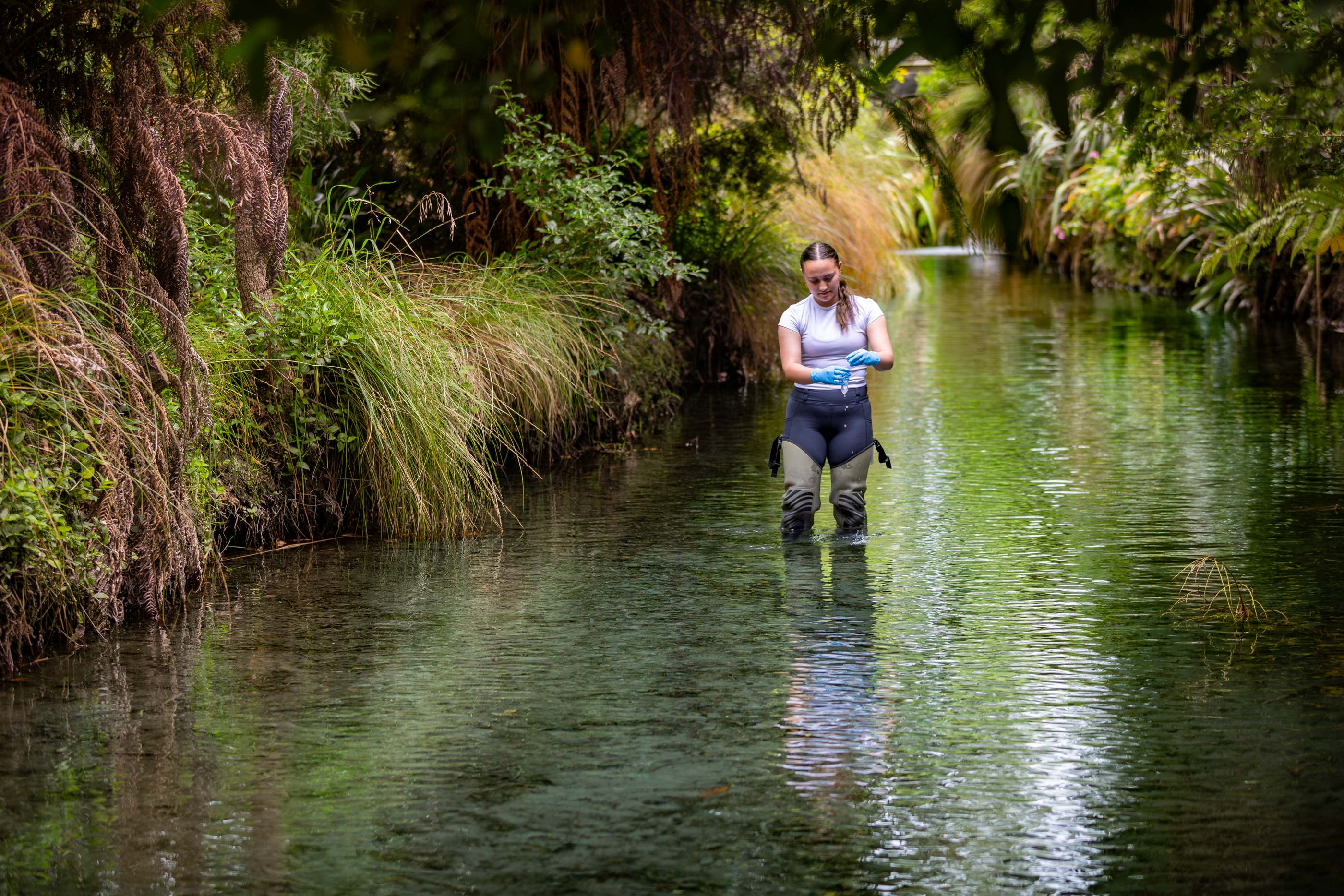
The project list is wide. UC says the scholarships cover Canterbury catchment flooding, movement of contaminants into groundwater, protection of freshwater ecosystems under changing land use and climate pressure, antimicrobial resistance in receiving waters, trace metals in contaminated soils, microplastic loads in urban waterways, and the possible climate and ozone impacts of stratospheric water vapour emissions linked to rocket launches. Other topics include water-intensive frost protection in vineyards and the use of extremophilic microorganisms to support geothermal discovery and monitoring.
For Canterbury, the flood component will be the most immediately recognisable. The region has just come through another period of heavy rain, road disruption and flood recovery. Research that improves flood prediction in Canterbury catchments has direct value for councils, emergency managers, farmers, insurers and households. Better evidence does not remove risk, but it can improve where warnings are targeted, how infrastructure is designed and how recovery resources are prioritised.
Groundwater and contaminants are just as important, even if they are less visible than floodwater. Canterbury's economy and settlements depend heavily on water systems that cross urban, rural and ecological boundaries. Contaminants can move in ways that are slow, technical and hard to explain to the public, but the policy consequences are real. Decisions about land use, infrastructure, irrigation, stormwater and drinking-water protection all rely on understanding what is happening below ground and in connected waterways.
The microplastics project also brings a city lens to the programme. Urban waterways carry the residue of daily life: tyre particles, clothing fibres, packaging fragments, construction runoff and stormwater material. Measuring microplastic loads is not just an environmental exercise. It helps councils and industries understand which interventions matter and where the greatest gains might be made.
UC Deputy Vice-Chancellor Research and Innovation Professor Lucy Johnston said climate change, biodiversity loss and unsustainable resource use are creating complex water-system challenges. She said the projects show how UC research can help improve water management, protect ecosystems and support communities to live within environmental limits. The university also says each scholarship provides a stipend for three years and gives candidates experience with partner organisations.
The announcement is not a quick fix for Canterbury's water problems, and it should not be treated as one. Doctoral research takes time, and its value depends on whether findings are translated into policy, engineering, farm practice, monitoring or community action. But the choice of theme is well timed. Water is already a pressure point in local government, agriculture, housing growth, biodiversity and emergency management.
The strongest part of the programme is its connection model. If partner organisations help shape the questions, researchers are more likely to produce answers that can be used. For Christchurch and Canterbury, that is the difference between another academic announcement and a pipeline of evidence that could shape how the region prepares for floods, protects groundwater and manages the everyday pollution that moves through its waterways.