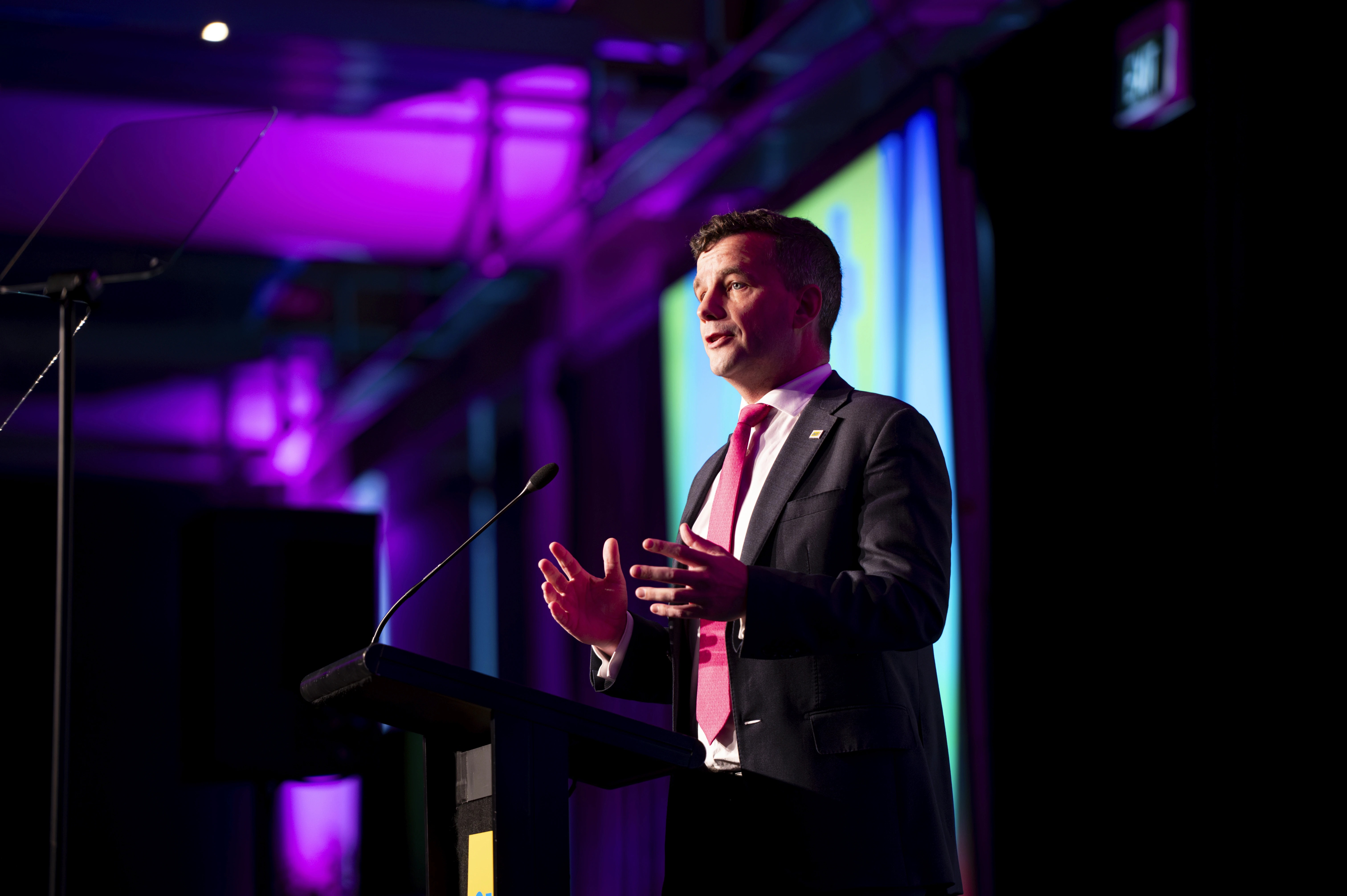
ACT leader David Seymour used a Christchurch speech on Thursday to pitch "Innovation Trials" as a permanent pathway for companies wanting to test emerging technology under temporary exemptions from existing rules.
The speech was delivered at the Canterbury Club on 16 July, according to ACT's published text. Seymour framed Christchurch as an example of resilience and innovation, pointing to the earthquake rebuild, software and agritech start-ups and the city's new enclosed multi-use stadium. His central argument was that New Zealand's productivity problem is linked to slow regulatory machinery that prevents businesses from using technologies already available overseas.
Local reporting said Seymour wants selected regulations to be suspended for limited periods while new technologies and alternative regulatory settings are tested. National coverage described the proposal as a permanent regulatory exemption scheme, similar to regulatory sandboxes used overseas, and reported that Seymour named driverless cars, heavy agricultural drones, clinical trials, cell-cultivated food, artificial intelligence, digital finance and precision agriculture as possible candidates.
The Christchurch setting matters. Seymour was not speaking in Wellington about an abstract policy document. He used a Canterbury audience to argue that firms in productive sectors are being held back by compliance costs, health and safety rules and consenting delays. That framing will resonate with some local businesses, especially those trying to commercialise technology in agriculture, construction, health, logistics or environmental monitoring.
The sharpest example was agricultural drones. Local reporting cited Seymour's claim that drones weighing more than 25 kilograms require Part 102 certification, a process he said could cost up to $2,000 and take more than 12 months. He contrasted that with Australia, where heavier agricultural drones can operate on farmland under simpler licensing. National coverage reported that the Ministry for Regulation had identified agricultural drones as an ideal trial candidate, but that the Civil Aviation Authority had put the issue on a two-year work programme.
For Canterbury farmers and agritech operators, the question is whether a trial pathway would reduce risk or simply move it. Faster testing may help local firms prove technology, attract capital and sell into export markets. But temporary exemptions still need clear safeguards: who qualifies, what data is collected, who supervises the trial, how affected communities are told, and what happens if a trial goes wrong.
The policy also has implications for Christchurch's start-up ecosystem. Founders often face a gap between prototype and real-world deployment. Universities, accelerators and investors can help companies develop products, but regulation determines whether those products can be tested with customers. A transparent trial pathway could make Christchurch more attractive for founders working in regulated sectors such as health technology, transport and food systems.
The politics will be contested. Supporters will see the proposal as a way to stop New Zealand losing talent and investment to faster-moving markets. Critics may see it as deregulation by another name, especially if exemptions are granted without enough public scrutiny. The details will determine which reading is fair.
What is clear is that Seymour chose Christchurch as the stage for a productivity and innovation argument. That gives the city a direct place in the national debate. If Innovation Trials become a campaign issue, Canterbury businesses will want to know whether the policy is a real front door for testing new ideas, or another promise that remains stuck inside the same slow system it criticises.