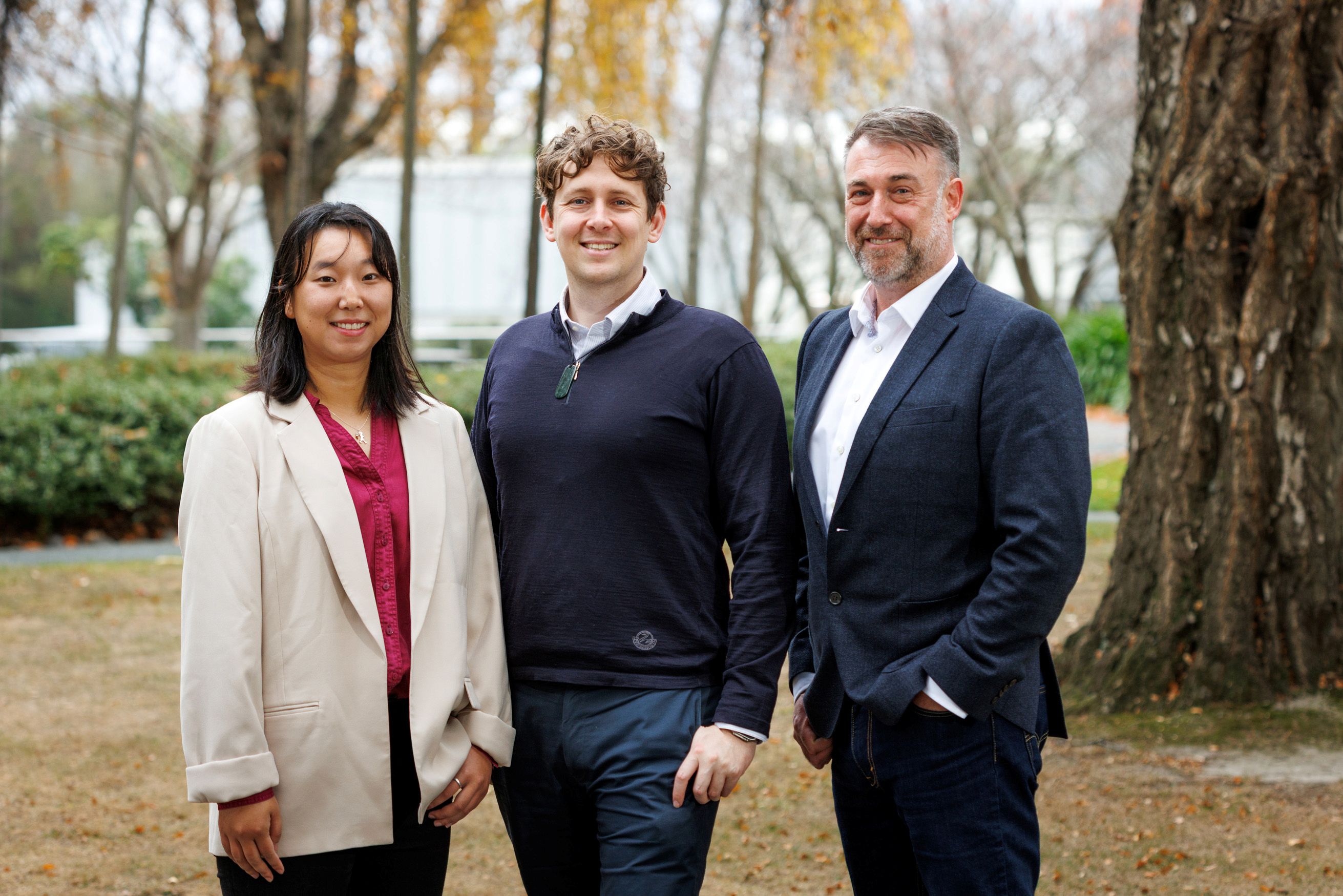
University of Canterbury start-up Zuuka has become today's founder-focused Christchurch business story, with co-founders Jake Campbell and Jamie Cairns commercialising a wearable insulin pump designed to make diabetes management simpler and more accessible.
UC reported on 9 July that Zuuka is developing a wearable drug infusion device aimed at overcoming limitations in existing insulin delivery systems. The university said the patented technology was developed by UC PhD graduate Jake Campbell, who co-founded Zuuka in 2025 with UC MBA graduate Jamie Cairns. The company is based at UC and is initially targeting the United States and New Zealand markets.
The timing is still relevant for Christchurch because the wider UC news cycle this week is focused on applied research and commercialisation. Zuuka is not a distant corporate announcement. It is a university-linked start-up trying to turn local engineering and business capability into a medical device with export potential.
Campbell told UC the design was shaped by accessibility. He said about two million people in the United States are insulin-dependent, while New Zealand has about 60,000. He also pointed to Christchurch's roughly year-long waiting list for specialist insulin pump training and the difficulty some rural patients face accessing specialist care. That gives the venture a clear problem statement: better technology is not enough if the device is hard to learn, hard to maintain or dependent on specialist support that patients cannot easily reach.
Zuuka's technical approach is built around a spring-based actuator system designed to operate for more than a year without recharging or battery changes. UC reported that the pump connects through a smartphone app to continuous glucose monitors and cloud-based systems, allowing remote monitoring. The article also said the cartridge replacement process is intended to be simple, with users discarding only the needle and insulin cartridge while keeping reusable electronic components.
Those details matter because medical-device innovation is often won or lost in everyday usability. A device that looks impressive in a lab can fail if patients cannot reload it, charge it, understand alerts or use it during disruption. Campbell's example from the Wairoa floods, where some patients could not charge devices for a week and had to return to manual injections, shows why resilience is a design issue rather than a marketing point.
Cairns told UC that early feedback from clinicians and potential users had been strongly positive. He said parents saw how a simpler design could help with night-time cartridge changes and everyday activities, and argued the pump could become one of the most intuitive on the market. Beyond diabetes, he said the system could potentially deliver other medications, including treatments for Parkinson's and steroid-based therapies.
The founder story is also about UC's commercialisation pathway. The university said its Research and Innovation team has supported Zuuka through licensing agreements and access to campus facilities. Cairns said the venture needed both engineering and business capability, and that the UC ecosystem helped bring those sides together.
Zuuka has completed a pre-seed funding round and is now seeking further investment to advance prototype development. That puts the company at a demanding stage: far enough along to have patents, a team and clinical interest, but still needing capital, regulatory work, testing and market entry. For Christchurch, the story is a useful marker of what local founder-led deep tech can look like when research, patient insight and commercial discipline meet.