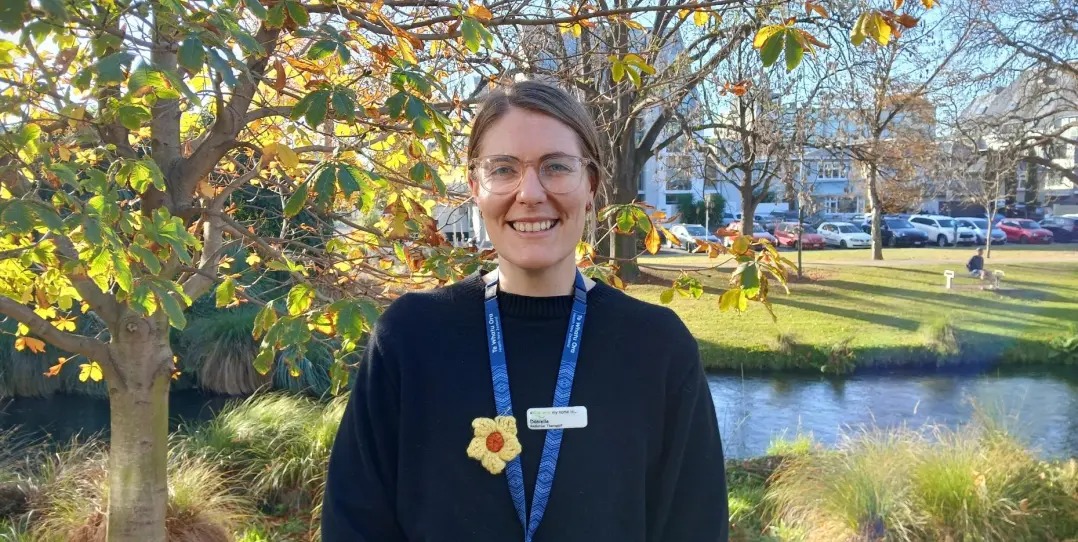
Cancer patients at Christchurch Hospital are getting faster access to radiation oncology care through a specialised role held by Danielle Duff, Health New Zealand says. The Canterbury update, published on 25 June, describes Duff as New Zealand's first externally credentialled Advanced Practice Radiation Therapist and says the model is already helping patients move through treatment pathways more quickly.
The practical numbers are the clearest part of the announcement. Health New Zealand says Duff saw 127 patients from the radiation oncology waitlist within her first year in the role. It also says the work freed about 111 hours of specialist doctor time, allowing senior clinicians to focus on more complex patients. In a health system where delays and workforce pressure are constant public concerns, those figures give the new role a measurable local effect rather than a vague process improvement.
Radiation therapy is a key part of cancer care, but it depends on careful assessment, imaging, planning, treatment delivery and follow-up. Health New Zealand says the advanced practice role allows Duff to independently assess new patients, carry out follow-up appointments, coordinate imaging and treatment planning, review acute needs and prepare patients for treatment. Those tasks have traditionally sat with senior medical officers and registrars, so shifting appropriate work to an advanced radiation therapist changes how the team uses scarce specialist time.
The role is especially relevant for South Island patients outside Christchurch. Health New Zealand says the model improves access for patients outside Canterbury, which is important because regional patients often face extra travel, accommodation and coordination barriers when specialist treatment is concentrated in larger hospitals. Faster assessment and clearer planning can reduce the time people spend waiting for the next step, and can also reduce avoidable bed stays.
Duff's background gives the development more weight. The New Zealand Lung Cancer Conference speaker profile lists her as an Advanced Practice Radiation Therapist at Christchurch Hospital, specialising in palliative care and service development within radiation oncology. It also describes her work on streamlined radiotherapy pathways using diagnostic imaging, with a focus on improving access for lung cancer patients, especially those in regional areas.
The local significance is not only that one clinician has taken on a new title. It is that Christchurch Hospital is testing a workforce model that could matter nationally. Hospitals cannot solve specialist shortages only by asking existing senior doctors to work harder. Some services need new scopes of practice, better use of allied health expertise and clear governance so patients remain safe while waiting lists move.
For patients, the outcome that matters is simple: earlier assessment, fewer delays and better continuity. For clinicians, the question is whether the model can be sustained without overloading the advanced practitioner or creating unclear boundaries. Health New Zealand's update presents early results as positive, but the longer test will be whether the model keeps reducing delays as demand changes.
For Christchurch, the story fits a wider pattern of health innovation that is often less visible than new buildings or funding announcements. A new role inside an existing service can make a real difference when it removes a bottleneck. If the Christchurch Hospital model continues to show results, it may become a useful example for other oncology services trying to improve access without waiting for a perfect workforce market.