A family-run Christchurch plumbing business has become the local-operator story at the centre of a wider question about commercial crime, recovery costs and practical community support after ADT Christchurch stepped in with a free monitored security system.
The business has not been publicly identified because the owners fear being targeted again. That caution is understandable. The source reporting says the plumbing couple had already been burgled three times in one week, had lost tens of thousands of dollars through stolen tools, vehicle damage and credit-card fraud, and had reached the point where they believed little more was likely to happen through the formal police response. Their experience is not a simple crime brief. It is a business-continuity story about how repeat break-ins can interrupt work, cash flow and staff confidence at the same time.
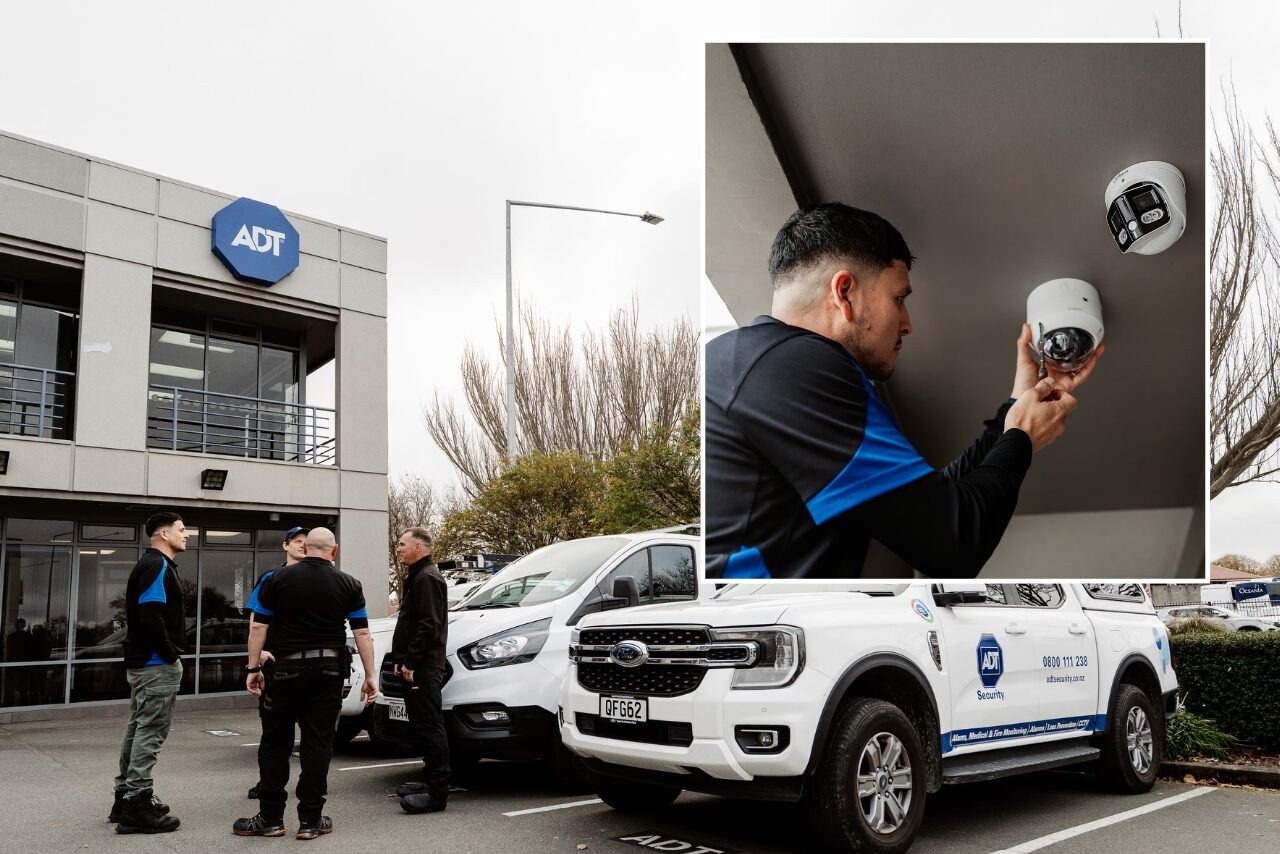
ADT New Zealand general manager Andy Brown said the company fitted the business with ADT Guard, a monitored video system that uses cameras and cloud-based software to detect a person in a restricted area. The reported point of the installation was not merely to add another camera after the fact. It was to create a live monitored deterrent, with monitoring agents able to trigger sirens or strobe lights, call police, or speak directly to an intruder through on-site equipment when the system flags a genuine incident.
That matters for trades businesses because tools are productive assets, not optional extras. When a plumbing firm loses equipment, the effect can land on jobs that were already booked, customers waiting on repairs, staff who need vehicles and gear ready in the morning, and owners who may have to replace items before insurance or bank processes are resolved. The cost of lost time can sit beside the cost of stolen property.
The business owner told the source outlet that ADT reached out after reading the earlier report and installed the system free of charge. The owner thanked Andy, Meghan and the ADT Christchurch team, saying they had been generous and supportive during a rough period. The source reporting also recorded that none of the stolen tools or equipment had been recovered nearly a month later, although there had been some progress on credit-card fraud through CCTV footage the owners had gathered themselves.
The founder and local-operator element of the story is important because anonymous owners can still be central to a public-interest article. The owners are not seeking publicity for a brand. They are trying to keep a family-run business secure enough to keep operating. Their choice to stay unnamed should not erase the practical pressure on small operators who cannot easily absorb several burglaries in a week.
There is also a civic question for Christchurch. Repeat commercial break-ins leave businesses making private investments in deterrence, lighting, cameras and monitoring at the same time as they pay rates, tax, insurance and staff wages. Security companies can help, and in this case one did so in a visible way. But the broader issue remains whether local businesses feel they have a realistic path from reporting crime to preventing the next offence.
For readers, the strongest takeaway is that commercial crime has a local supply-chain cost. When tools disappear, jobs are delayed. When vehicles are damaged, staff movement is affected. When owners spend nights checking cameras or chasing fraud transactions, they are not building the business. ADT Christchurch's response gives one business a better chance of sleeping and trading normally again, but it also shows how much burden can fall on local operators after the first police report is filed.