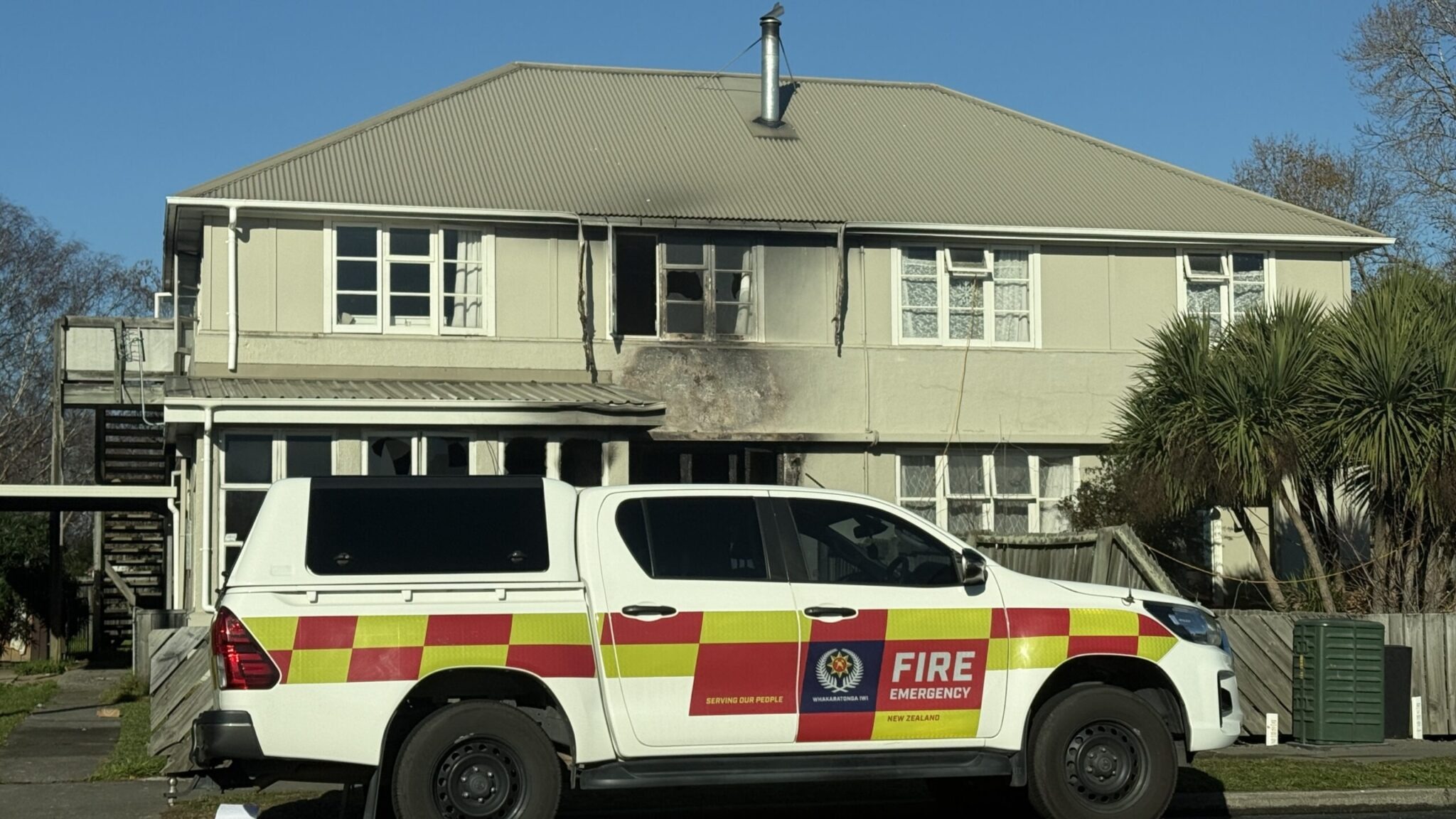
A 39-year-old man has been charged after a suspicious Upper Riccarton house fire that forced a family to escape a burning property on Riccarton Road.
Chris Lynch Media reported that eight people, including a pregnant woman, and a dog were inside the property when the fire broke out early on Friday 17 July. The latest report said the man is due to reappear in the Christchurch District Court on 11 August and faces charges including wilful damage to property by explosive, intentional damage, drug possession charges and failing to meet obligations relating to a computer search.
The details reported from inside the house are confronting. A mother, whose name was withheld, said flames had trapped her and her young daughter near the entrance, forcing her to get the child out through a dangerous front-door area. All occupants escaped safely, according to the report. Fire and Emergency crews from Ilam and Wigram had previously responded to the blaze, with the first crew finding the house well alight.
Because the matter is before the court, the public framing needs to stay disciplined. The charges are allegations, and guilt or responsibility is for the court to determine. What can be said now is that police have laid charges, the fire was treated as suspicious in local reporting, and the occupants' escape highlights how quickly a residential fire can become life-threatening.
For Christchurch residents, the story carries a practical lesson beyond the court file. A house fire does not need a long burn time to become dangerous. Smoke, heat, broken glass, blocked exits and panic can compress decisions into seconds. If several people are asleep or spread across rooms, one blocked exit can leave occupants with poor choices even before firefighters arrive.
The Riccarton Road location also matters. Upper Riccarton is a busy mixed residential and commercial corridor, with older homes, rental properties, student households, families and traffic pressure close together. A fire at one property can quickly affect neighbours through smoke, falling debris, emergency cordons and road disruption. Early morning fires are especially risky because occupants may wake late or underestimate how fast flames have moved.
Emergency planning is often discussed in general terms, but this case shows why households need specifics. People should know more than one exit, keep exit paths clear, test smoke alarms, agree where to meet outside and make sure children know not to hide inside during a fire. Landlords and tenants both have roles to play: alarms need to work, overcrowded or cluttered rooms need attention, and damaged electrical equipment or blocked doors should not be ignored.
The court process will determine what happened and who is legally responsible. Until then, the careful public-interest angle is safety and accountability. A family escaped, charges have been filed, and a Christchurch court date is now set for August.
For nearby residents, the event is a reminder to take fire risk seriously even in familiar homes. For the justice system, it is now a case that must balance public concern, the rights of the accused and the experience of the people who were inside the house when the fire took hold.