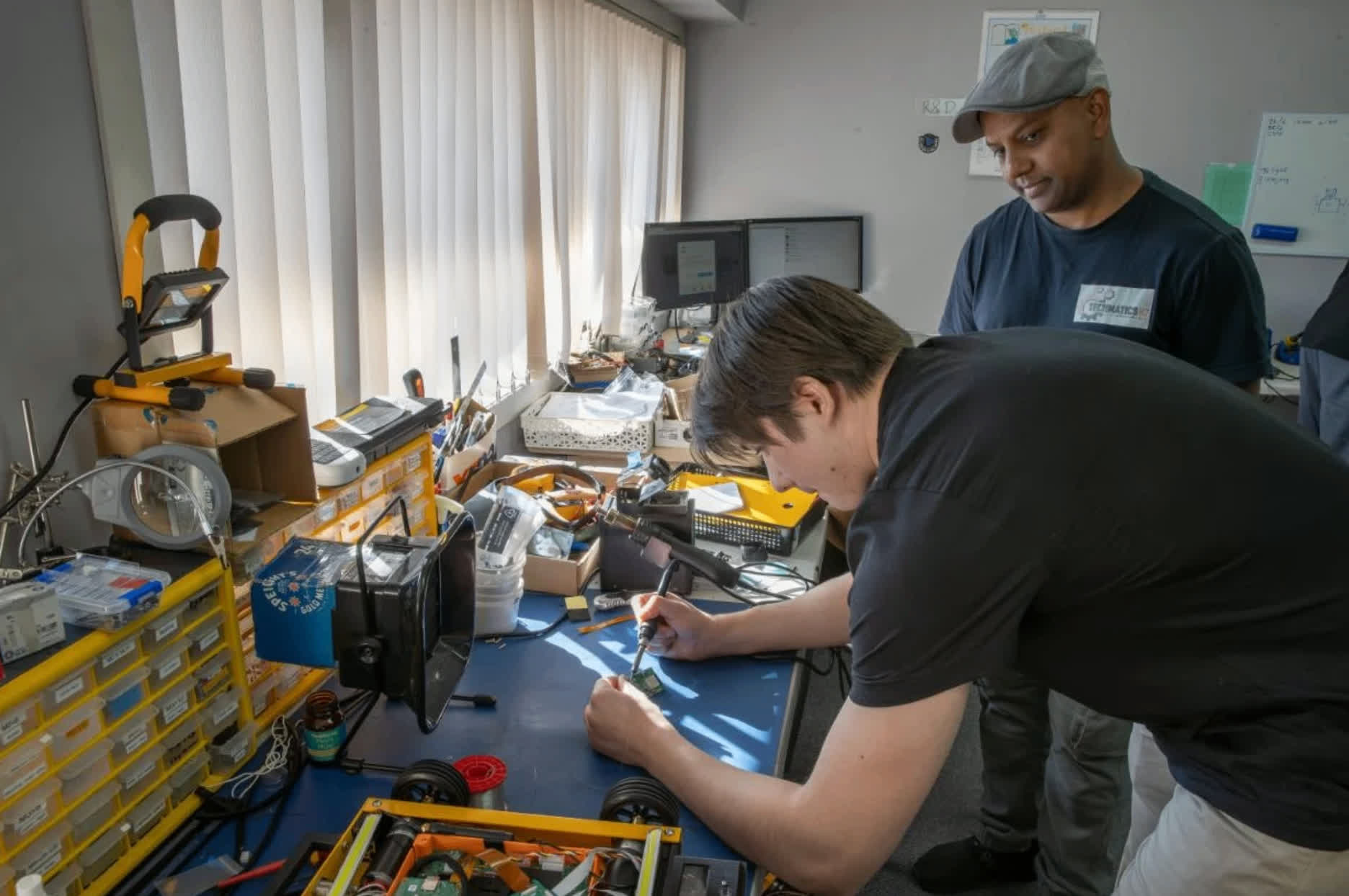
When Ravi Sanyal stood in front of the Christchurch Business Club in May 2026, the topic was not just robotics. It was the kind of founder story Christchurch has become increasingly good at producing: practical technology built around real-world problems.
Sanyal is the founder of Techmatics, a Christchurch robotic technology company. The Christchurch Business Club promoted him as the guest presenter for its May 18 business luncheon at the Canterbury Club, describing him as the founder of the local robotic tech startup.
His public profile lists him as founder and director of Techmatics NZ, with more than a decade of sales management experience and several years in product development. That mix is important. Many founders come from either the commercial side or the technical side. Sanyal's background appears to sit across both, giving him a practical view of how to take a product from concept to market.
Techmatics is best known for technology used in inspection and automation. Public material connected to Sanyal describes work around crawlspace inspection robots, and previous coverage has framed his journey as a robotics entrepreneur who built the company from the ground up after immigrating to New Zealand.
That founder path fits neatly into Christchurch's wider business identity. The city has become known for applied innovation, particularly where technology meets engineering, infrastructure, health, and manufacturing. Unlike startup ecosystems built around hype, Christchurch has a habit of producing companies that solve specific problems for specific sectors.
Sanyal's story also shows the importance of founder visibility. Speaking at a business club luncheon may seem like a small moment compared with a capital raise or national award, but for a local founder, these events matter. They put entrepreneurs in front of other business owners, potential partners, investors, and customers. They make the founder part of the city's business conversation.
The more Christchurch leans into founder storytelling, the more these stories become valuable. A robotics company is not just a business selling a product. It is proof that technical founders can build from Ōtautahi, that innovation does not have to relocate to Auckland, Australia, or the United States to be taken seriously.
For Sanyal, the next chapter of the story appears to be about growth, credibility, and adoption. Robotics companies face a particular challenge: they must convince customers not only that the technology works, but that it is worth changing old processes for. That requires patience, education, and a founder who can explain both the technology and the business case.
That may be why Sanyal's background is so relevant. A founder who understands sales, product development, and the practical concerns of customers is better placed to bridge the gap between invention and commercial use.
In Christchurch, Techmatics sits inside a growing local narrative: founders building serious, useful technology from a city that increasingly sees innovation as part of its future. Sanyal's May appearance was one more sign that Christchurch's founder community is not waiting to be noticed. It is showing up, building, and telling its own story.