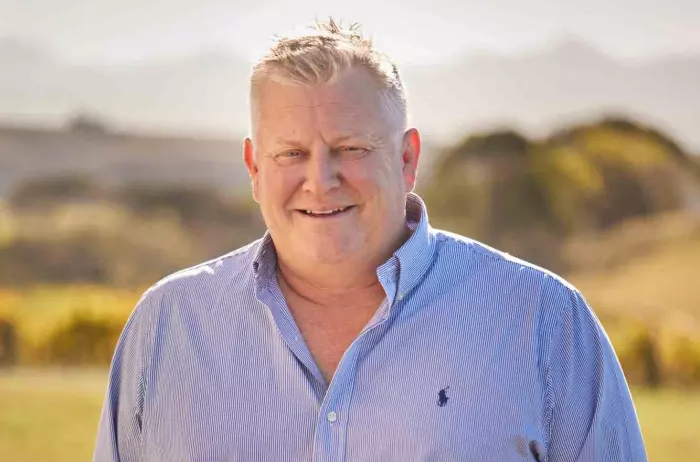
Christchurch Business Club is putting a national founder story in front of local business leaders this week, with Indevin Group founder Duncan McFarlane scheduled to speak at the Canterbury Club on Monday 13 July.
The club's LinkedIn page says McFarlane, founder of Indevin Group and chair of the Icehouse, is presenting at a members and guests luncheon at 12pm at the Canterbury Club on Cambridge Terrace. The timing gives Christchurch a useful founder-focused business item even though the strongest source material is not a conventional breaking-news announcement. It links a local business room with a founder whose company moved from opportunity spotting in wine production to a major New Zealand export platform.
Indevin's own history says McFarlane spotted an opening in 2003 as Marlborough sauvignon blanc production surged and the young industry needed contract winemaking infrastructure. The company started as a service provider for fast-growing wine companies and built its first winery near the Wither Hills. By 2014, Indevin says it had become New Zealand's largest wine producer, owner and operator of winery infrastructure, with owned and managed vineyards across Marlborough, Gisborne, Hawke's Bay and Central Otago.
That trajectory is why the Christchurch event is relevant beyond the wine sector. Many Canterbury businesses face a version of the same scale question: how to move from founder effort and customer demand to systems, governance, capital, talent and repeatable delivery. A company can grow quickly and still become fragile if the founder remains the only person holding the operating model together. McFarlane's story gives the room a practical case study in what has to change as a business becomes larger than its original instincts.
The Icehouse announced in May that McFarlane would replace David Downs as chair from 1 June 2026. Its announcement said he was an Icehouse alumnus and brought deep commercial experience and a first-hand understanding of what it takes to scale a New Zealand business. The article also quoted McFarlane saying that to scale a company, a founder first has to scale themselves.
That idea is useful for Christchurch because the city's business community includes many owner-managed firms. Construction, manufacturing, food production, technology, professional services, tourism, retail and health businesses often begin with a capable operator solving a real problem. The pressure comes later, when growth demands stronger management layers, clearer strategy, financial discipline, succession planning and confidence to operate beyond the founder's direct reach.
McFarlane's earlier Icehouse interview adds another practical point. He said he had learned on the job and had no formal management training when he entered the Owner Manager Programme in 2008. That kind of admission matters in a room full of business owners. It normalises the fact that founders can be technically strong, commercially brave and still need structured support to lead a bigger organisation.
For Christchurch Business Club, the value of the luncheon is therefore not celebrity or scale for its own sake. It is the chance to connect local operators with a founder who has lived through growth, governance and transition. Indevin has moved from a founder-led infrastructure idea to a major producer connected with national wine brands and export markets. The Icehouse role then places McFarlane in a broader support system for Kiwi founders and business leaders.
The founder-focused test for Canterbury is what local owners take from that story. The lesson is unlikely to be that every business should become a national giant. It is more grounded: know when the business has outgrown informal systems, invest in the founder's own capability, and build an organisation that can keep creating value after the first phase of hustle is over.