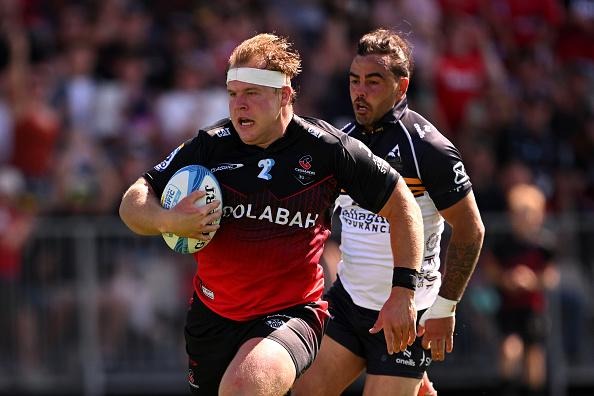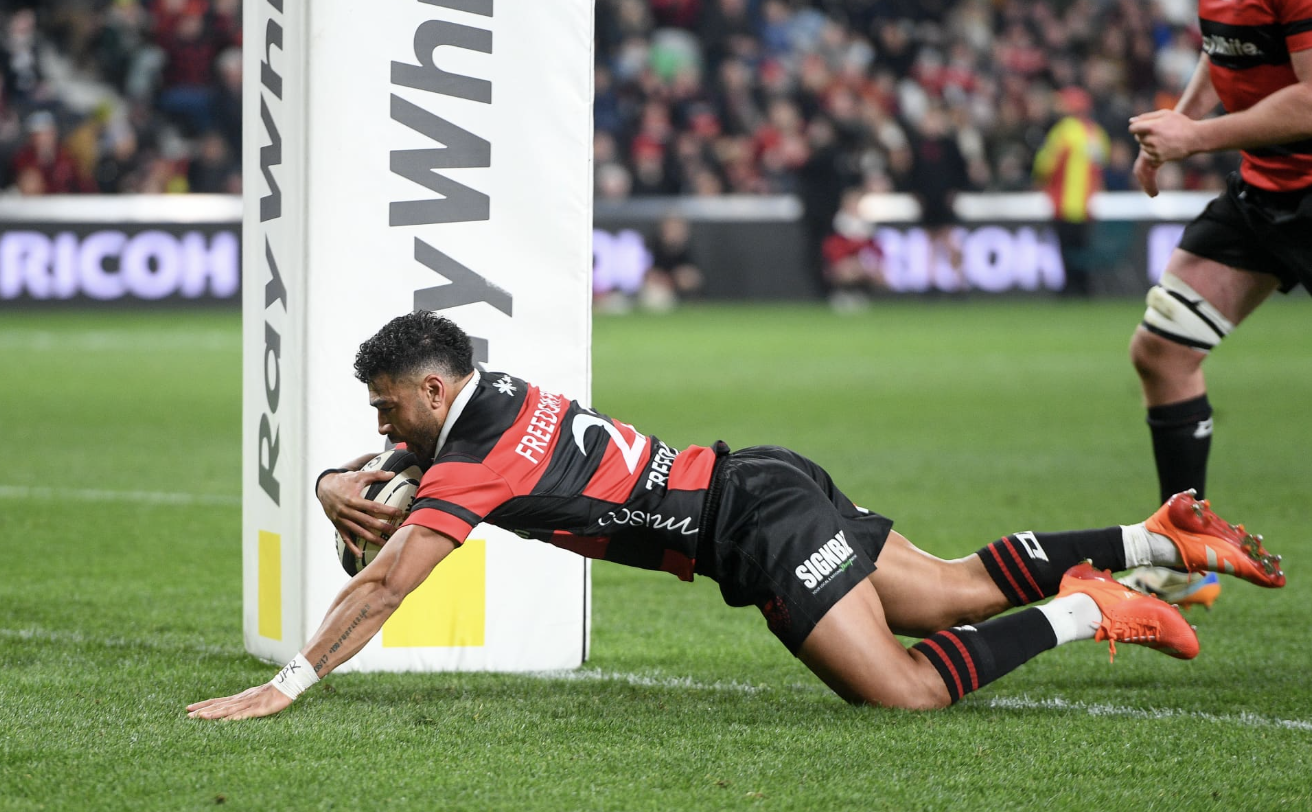
Richie Mo'unga's first Canterbury appearance since 2020 turned into the exact kind of return Christchurch rugby supporters hoped for, with the first five-eighth scoring the decisive late try in a 38-31 win over Auckland.
1News reported that Mo'unga came off the bench in the second half of Saturday night's NPC match after returning from three years playing in Japan. Canterbury had led 26-21 at halftime before Auckland fought back, and the match was locked at 31-all with time running down. In the 78th minute, after Canterbury kicked a penalty to the corner and drove close through a lineout maul, Mo'unga picked up from the back of a ruck, sold a dummy and scored by the posts before converting his own try.
The final score gives Canterbury a strong opening-night result, but the larger story is what the performance means for Christchurch and for New Zealand rugby's next few months. Mo'unga has been one of the country's most closely watched returning players because his move back into New Zealand rugby carries both local and All Blacks implications. Canterbury Rugby and the Crusaders confirmed last year that he would return to Canterbury for the 2026 and 2027 NPC seasons and to the Crusaders for the 2027 Super Rugby Pacific season.
The comeback was not flawless, and that may make it more useful. The source report said Mo'unga had some awkward early moments after entering the match, including a knock-on and a missed conversion he would normally be expected to land. That matters because it keeps the story grounded. After a long period offshore, a returning star still has to adjust to teammates, timing, competition rhythm and the pressure of a crowd expecting instant control.
What happened late in the match showed why Canterbury supporters were still right to be excited. With the game tight, Mo'unga did not need a long highlight reel. He needed one correct read, a quick change of angle and enough composure to finish under pressure. That is the kind of action that has defined much of his career: small movement, large consequence. In a match against an old provincial rival, it was also the kind of finish that reminds supporters why the NPC still has emotional weight in Christchurch.
Patrick McKendry's 1News analysis put the crowd at about 20,000 in Christchurch and described the sense that many had come to see one player. That figure is significant for a provincial fixture because it shows the return was not just a selection note. It was a local event. Canterbury rugby has spent years rebuilding around new venues, changing competitions and shifting supporter habits. A high-profile return under the roof gives the city a reason to reconnect with the red-and-black provincial story as something more than a feeder system.
The All Blacks question will now sit over every Mo'unga appearance. He is 32, has 56 Tests behind him according to 1News, and remains a player whose game management, kicking and attacking instincts can influence a national selection debate quickly. But the safe conclusion from this match is narrower: he has returned to New Zealand competition, fulfilled the first visible step of his Canterbury comeback, and immediately produced a match-winning moment.
For Canterbury, that creates both momentum and expectation. The defending champions have shown they can still score and close out a tight match, but the opening round also showed how quickly Auckland could punish errors and turn the game. If Canterbury want another title run, Mo'unga's presence will help, but the wider squad still has to build consistency around him rather than waiting for him to solve every late problem.
For Christchurch supporters, the practical takeaway is simpler. A major local rugby figure came home, the crowd came with him, and Canterbury beat Auckland in a match that had enough drama to justify the attention. The performance was not perfect, but the finish was decisive. That is a useful place for a comeback to begin.