The Arts Centre Te Matatiki Toi Ora is preparing for a leadership transition after director Philip Aldridge was confirmed to be critically unwell and unable to return to work.
Local reporting on Friday said board chair Stella Ward had advised that Aldridge's condition meant the organisation was now working through continuity arrangements. The Otago Daily Times also reported that Ward described the news as devastating for people who knew and had worked with him, while saying the board would communicate interim arrangements once confirmed.
The family privacy request is important and should be respected. The public interest here is not in personal medical detail. It is in what Aldridge's absence means for one of Christchurch's most important cultural institutions at a time when the central city continues to rebuild its rhythm around arts, education, heritage, hospitality and events.
Aldridge's career has been closely tied to Christchurch's post-earthquake cultural recovery. Before joining The Arts Centre in 2018, he spent 13 years as chief executive of The Court Theatre. After the February 2011 earthquake damaged the theatre's former Arts Centre home, he helped lead its move to The Shed in Addington. The theatre's reopening later that year became one of the clearest signs that Christchurch's cultural life could resume even while the city around it was still disrupted.
That history matters because cultural leadership in Christchurch has often required more than programming shows or managing buildings. It has required fundraising, temporary venues, heritage repair, public confidence, staff resilience and a willingness to keep inviting people back into shared spaces. Aldridge's Officer of the New Zealand Order of Merit, awarded in 2012 for services to theatre, reflects that wider contribution.
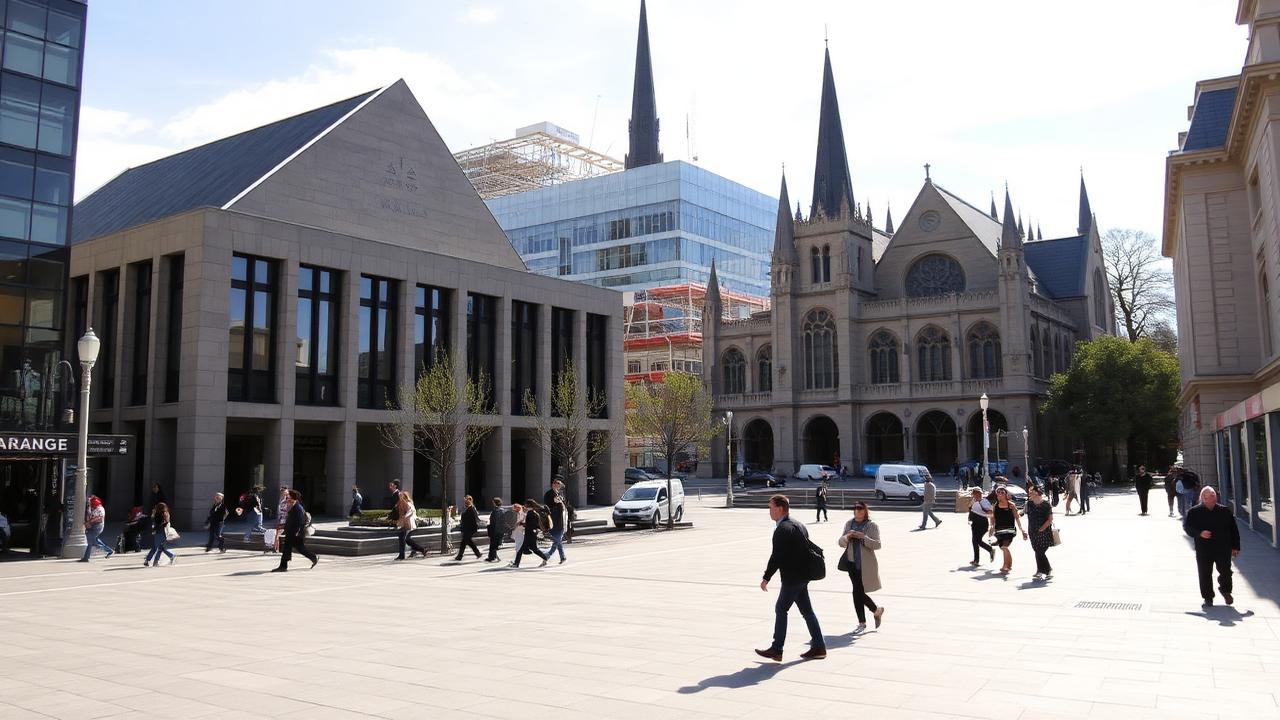
The Arts Centre itself carries a different but related challenge. Its restored stone buildings are among Christchurch's most recognisable heritage assets, yet they are costly to maintain and must keep proving their relevance as a living precinct. Under Aldridge, the centre has worked to attract artists, visitors, tenants and community activity back into buildings that could easily have become admired but quiet.
The next leadership arrangement will therefore need to do two jobs at once. It must give staff, tenants, artists and partners confidence that day-to-day operations will continue. It must also keep a longer-term strategy alive for a precinct that sits between heritage responsibility and modern cultural use.
The timing is sensitive because central Christchurch's arts calendar and visitor economy have become increasingly connected. The Court Theatre, The Piano, the restored Arts Centre, festivals, galleries, hospitality venues and the new stadium all contribute to whether people see the city centre as active and worth visiting after work and on weekends. A leadership gap at one institution can affect wider confidence if it is not managed clearly.
For the board, the immediate communication task is narrow: name interim leadership, explain continuity, protect privacy and avoid speculation. For the wider city, the moment is a reminder of how much Christchurch's cultural recovery has depended on a relatively small group of persistent leaders.
Aldridge's illness is first a private family matter. Publicly, it is also a point at which Christchurch can acknowledge a significant arts leader while watching carefully for how The Arts Centre keeps its restoration, programming and financial responsibilities moving through the transition.