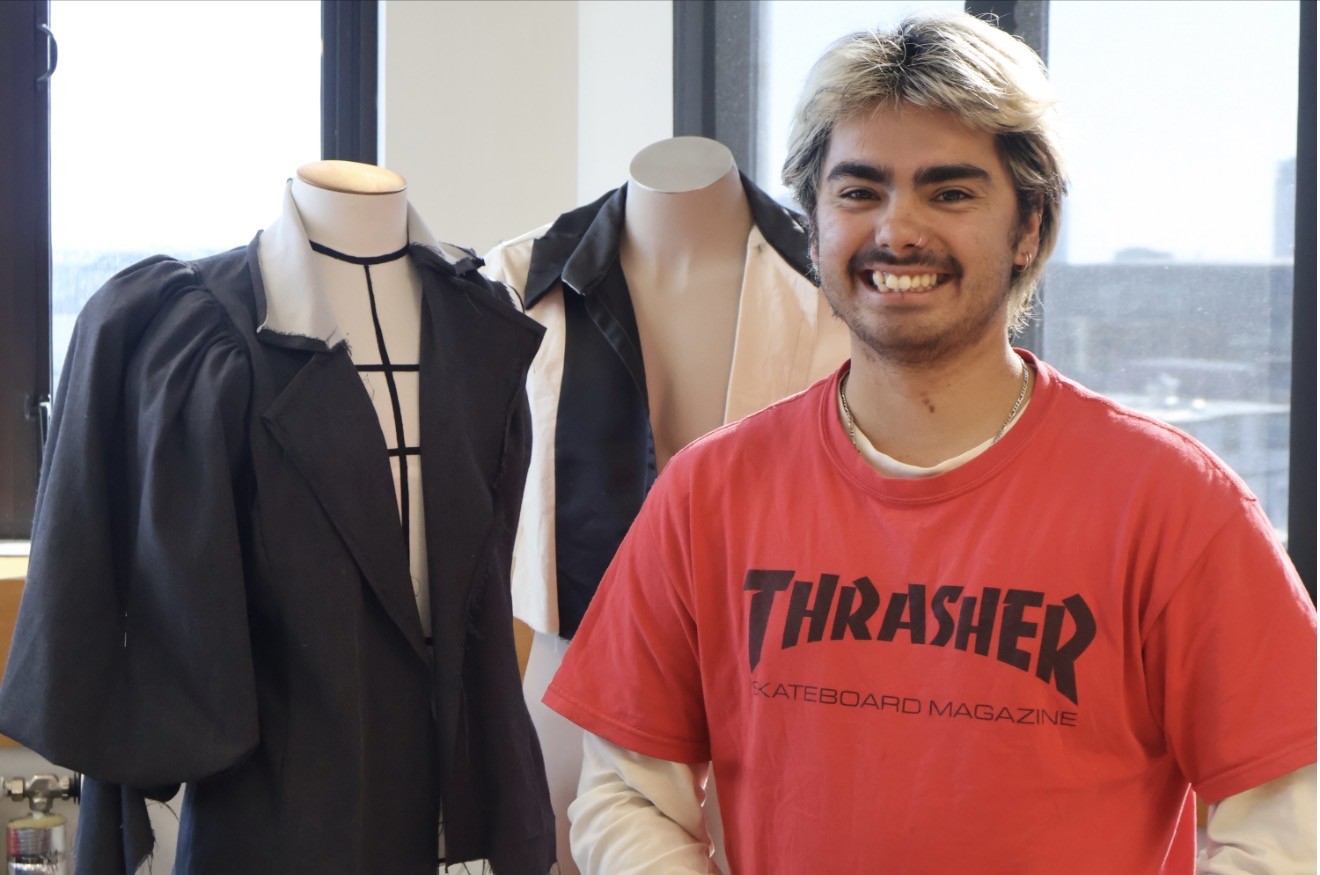
Ara Institute of Canterbury fashion student Alex O'Hagan has given Christchurch's design scene a national lift, winning three honours at the 2026 Hokonui Fashion Design Awards for a collection developed during his final year of study.
Chris Lynch Media reported on Tuesday that O'Hagan won the Open Collections category, the Best Use of Fabric Award and the Mataura Licensing Trust Award of Excellence at the weekend ceremony in Gore. The source report said the collection came out of work developed during his third year in Ara's Bachelor of Design, Fashion Technology and Design programme. Ara's own release, also carried through Scoop, confirms the triple success and frames it as a major achievement for the programme.
This is the creator-focused story in today's Christchurch pack because it is not simply a student prize notice. Fashion awards recognise a working creative process: concept, fabric choice, pattern, construction, finish, presentation and the ability to make a collection coherent under judging conditions. For a final-year student, that is close to the bridge between study and professional practice.
The collection's theme gives the story substance. The source material says O'Hagan explored the relationship between control and spontaneity in the creative process, with the work growing from a summer internship. That suggests a designer learning how to hold a clear technical standard while leaving room for discovery. In fashion, that balance is not decorative language. Too much control can make work static; too much spontaneity can make it unresolved. Winning across a category and two special awards points to a collection that handled both.
The judging response also matters. The report recorded praise for O'Hagan's fabric understanding, proportions, craftsmanship and creative direction. Those are the areas that separate a striking concept from a garment that survives close inspection. Christchurch readers may see the images first, but the professional signal is in the detail: how fabric behaves, how silhouettes sit on bodies, and how finish supports the idea rather than distracting from it.
Ara's wider fashion community also had a strong showing. The source report said programme co-lead Holly Liberona was runner-up in the Open Gala category and second-year student Isabella Fenton earned a highly commended placing in Open Avant Garde. That matters for the city because creative ecosystems are built through clusters, not isolated names. When learners and tutors both appear in national award results, it suggests the programme is staying connected to industry standards.
For Christchurch, the local value is broader than one trophy cabinet. The city has long had strong architecture, craft, design, film, music and performing arts communities, but creative careers can be difficult to sustain without visible pathways. National recognition gives emerging designers evidence they can show to employers, collaborators, buyers and postgraduate selectors. It also gives local students a reason to believe that serious creative work can start here.
O'Hagan reportedly returned quickly to Ara after the awards to keep working on his final graduate collection. That is a useful ending because it keeps the story grounded. Awards are a milestone, not the whole career. The next test will be how the collection develops, where the designer takes the work after graduation, and whether Christchurch's creative infrastructure can help convert talent into an enduring practice.