Christchurch biotech company Tertiary Extracts Otautahi, known as TEO, has become the clearest founder-led business story in this week's local innovation cycle, with ChristchurchNZ highlighting how the company is turning unused sheepskins into wellness ingredients and specialist jobs.
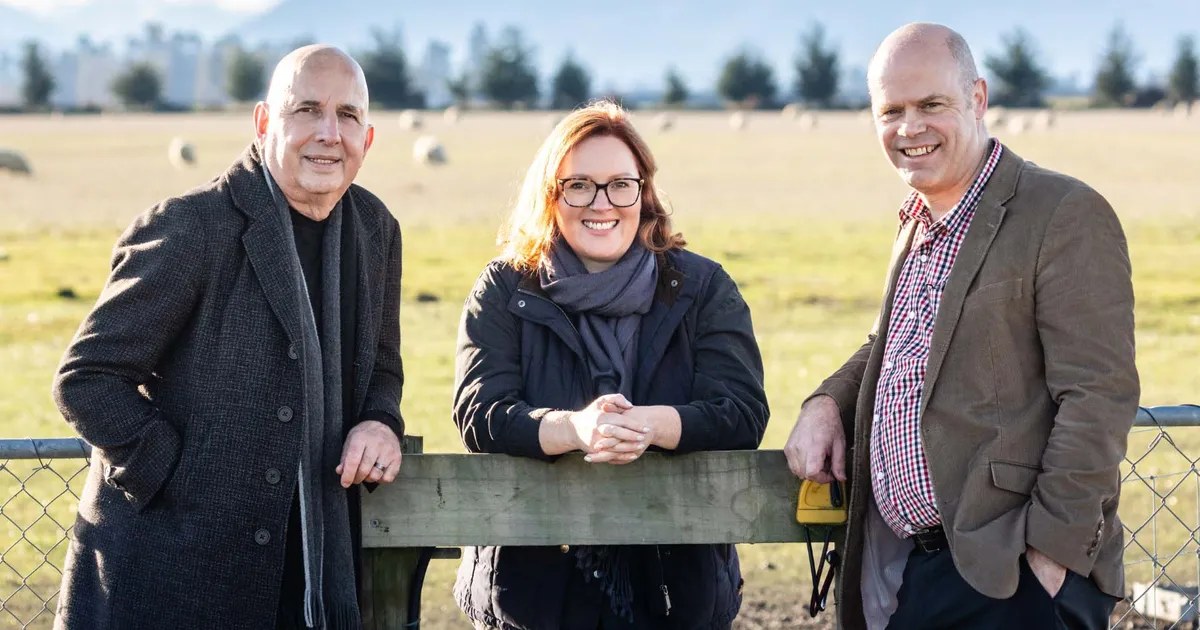
The company was profiled by ChristchurchNZ on 27 July as part of the city's bioeconomy sector coverage. The agency said TEO is transforming sheepskins, often treated as a meat-processing by-product, into collagen products with health, wellness and export potential. The story identifies Dr Rob Kelly as joint founder and chief scientific officer and Dr Alisa Roddick Lanzilotta as part of the founding team imagery, with Paul Sapsford as CEO and Kimberley Bray as co-chief executive.
The business idea is built around an overlooked resource. Large numbers of sheepskins can end up unused after processing. Collagen extraction from animal skin is not new, but TEO's point of difference is its process for treating the entire sheepskin, including wool. ChristchurchNZ said the company has developed a patent-pending process that extracts proteins from both the skin and the wool, rather than removing the wool before extraction.
The company's flagship ingredient is Ovitage, an edible ovine collagen. ChristchurchNZ said it is rich in amino acids including cystine, tyrosine and glutamic acid, and is being used as the foundation for Everee Women, a supplement range aimed at women navigating hormonal change. The product pipeline is also expanding into areas such as sports recovery proteins, functional lipids, skin microbiome health, mood and cognitive wellness, and GLP-1 support.
For Christchurch, the important part is not only the product. It is the type of economy the company represents. A bioeconomy business connects science, manufacturing, farming supply chains, waste reduction and export ambition. That gives the city a different growth path from pure software or traditional manufacturing. It also creates roles for people with laboratory, quality, production, logistics and commercial skills.
ChristchurchNZ said TEO has created more than 30 STEM jobs in Christchurch since launching, across manufacturing, biologics, microbiological research and development, quality systems and export logistics. The agency also said the company has invested more than $1 million in research covering bioavailability, efficacy and delivery methods. Support from AGMARDT, Callaghan Innovation and a $1.7 million friends-and-family investment helped establish a dedicated manufacturing facility in 2024.
Sustainability is central to the local story. TEO's model aims to reduce waste by giving value to skins that might otherwise be discarded, while creating new income opportunities for farmers. ChristchurchNZ said every batch is traceable to South Island farms, linking the product back to regional agriculture.
The founder angle matters because Christchurch often talks about innovation in broad terms. TEO gives that ambition a tangible local example: scientists and operators using a regional agricultural by-product to build a higher-value product line. The company still has to prove its market at scale, especially internationally, but the foundations are clear. It combines a waste problem, a specialist extraction process, a consumer wellness market and local manufacturing capability.
For Canterbury business owners, the lesson is practical. Innovation does not always start with a new app or a new building. Sometimes it starts by looking again at a material the existing economy has treated as low value. TEO's story shows how founder-led science can turn that material into jobs, intellectual property and a new export-facing category for Christchurch.